
Reviewed · HISTORICAL TOURS
Medical and Surgical History of Edinburgh – Private Walking Tour
Medicine left its footprints all over Edinburgh. This private walking tour traces how Edinburgh’s medical training and healthcare institutions grew from street-level roots to major landmarks, with a guide who brings a physician’s lens to the stories. I love how each stop is practical and specific, with free-entry moments that keep the walk from feeling like a lecture. I also love the social angle, like the long fight to open medical education to women. One thing to plan for: it’s about 2.5 miles of walking over roughly 3 to 4 hours, so if your body doesn’t love hills and steady pavement, this may not be your best Edinburgh day.
You’ll start on Hunter Square in the Old Town area, then work your way through closes and historic buildings tied to physicians, surgeons, and medical schools. The ending is at the Edinburgh Futures Institute, in the former Royal Infirmary complex, so you finish right where the story lands. Also worth knowing: it’s run as an English-language private tour for your group only, and it’s popular enough that it’s often booked around 75 days ahead.
In This Review
- Key highlights worth your time
- Royal Mile start: where medicine gets a proper address
- Cowgate and Robertson’s Close: the first teaching hospital story
- Surgeons’ Hall Museums break: women’s fight in medical education
- University of Edinburgh medical school: what student life actually meant
- Bristo Place and Darwin’s medical student lodgings
- Lauriston Place finish: stories at the former Royal Infirmary gates
- Price and value: what you’re really paying for
- Who should book, and who should skip
- Should you book this Edinburgh medical tour?
- FAQ
- How long is the Edinburgh medical and surgical private walking tour?
- What does the tour cost?
- Where do we meet, and where does the tour end?
- Is the tour private?
- Is the tour in English?
- Is admission included?
- Is there a coffee or tea stop?
- How much walking is involved, and who should avoid it?
- What if the weather is bad?
- Is a service animal allowed?
- Is free cancellation available?
Key highlights worth your time
- Street-by-street medical history starting on the Royal Mile and ending at the old Royal Infirmary grounds
- Free entry at every stop marked Admission Ticket Free, so you’re paying for guided storytelling, not extra admissions
- Surgeons’ Hall + women in medicine with a real-world pause that turns the lesson into a break
- Student life at the University of Edinburgh grounded in what medical training actually felt like
- A Darwin med-student connection on Bristo Place, linking science history to everyday life
A handful of other Edinburgh outings that caught our eye
- Edinburgh: Harry Potter Magical Guided Walking Tour★ 4.8 · 11,944 reviews
- Edinburgh Castle: Guided Walking Tour with Entry Ticket★ 4.7 · 11,699 reviews
- Underground Vaults Walking Tour in Edinburgh Old Town★ 4.5 · 8,506 reviews
- Edinburgh Castle: Guided Walking Tour with Entry Ticket★ 5.0 · 5,540 reviews
Royal Mile start: where medicine gets a proper address
The tour kicks off on the Royal Mile, Edinburgh’s old spine of a street. This is a smart way to begin, because the Royal Mile isn’t just pretty. It’s a timeline you can walk on. As you head along it, the guide connects early Edinburgh medical life to real locations and institutions, not vague names. You’ll hear how the city’s medical culture formed and how professional groups created spaces for teaching, learning, and practice.
One of the best parts here is the “origin story” feel. Instead of rushing to big buildings, you start with the formation of medical community—where physicians gathered, where knowledge was organized, and how the city’s institutions began to take shape. Even if you don’t normally care about medical history, the idea is easy to follow: people created systems, those systems grew, and Edinburgh became a major medical center because of that momentum.
You’ll also get a look at an alleyway tied to a physicians’ college. In Edinburgh, those little passageways matter. They’re often the difference between a tourist photo and actually understanding how the city worked. This is also where the walking pace tends to feel most friendly. It’s the start of a longer loop, so you’re building energy, not spending it.
Cowgate and Robertson’s Close: the first teaching hospital story
After the Royal Mile, you’ll shift into the Cowgate area, just off the main route. Cowgate is where Edinburgh starts to feel more layered and older—tight lanes, tricky corners, and a different rhythm to the street life. This part matters because the tour moves from professional roots into the practical world of teaching hospitals.
The focal point is Robertson’s Close, connected to an early teaching hospital called The Little House. That’s a powerful idea on foot: it’s one thing to hear that medical education existed; it’s another to stand near where it was born. The guide then carries you into the next stage—following the development into its successor, the first Royal Infirmary of Edinburgh. This is where the story stops being a legend and becomes an institutional evolution.
What I like about this section is how it links “medicine” to the real city problem medical systems always face: where do you train people, where do you treat patients, and how do you scale up? The tour keeps those questions in the background while it names specific places. That makes the history stick, because it’s not just dates—it’s the practical grind of building a healthcare system.
This stretch also gives you a chance to slow down just enough to take in the street layout. If you’ve ever wondered why Edinburgh feels like it hides stories in plain sight, Cowgate is a good example.
Surgeons’ Hall Museums break: women’s fight in medical education
Next comes Surgeons’ Hall Museums, the surgical profession’s historic home. The tour uses this stop well because it’s both a learning moment and a reset. You’ll get your refreshment break here, which matters on a 3 to 4 hour walking tour. It keeps the day enjoyable instead of turning into a march of facts.
The story focus at Surgeons’ Hall is especially compelling: the years-long battle to get women admitted to the medical school. This isn’t presented like a side note. It’s part of how medical institutions changed, and it’s a reminder that progress in healthcare isn’t only scientific. It’s also legal, social, and institutional.
I also like how the guide connects profession to policy. Surgeons, physicians, and the training institutions they ran weren’t floating in a vacuum. They had gatekeepers, rules, and cultural assumptions that shaped who could become a doctor. Hearing that at the surgical profession’s historic home makes it feel less abstract.
One practical point: because this is a museum stop plus a break, give yourself a little mental space here. Sit, refill water if you need it, and let the story catch up before you move on. You’ll appreciate what comes next more if you’re not rushing.
University of Edinburgh medical school: what student life actually meant
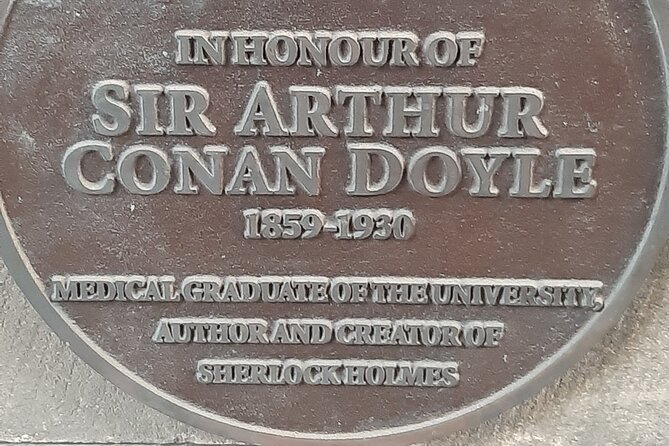
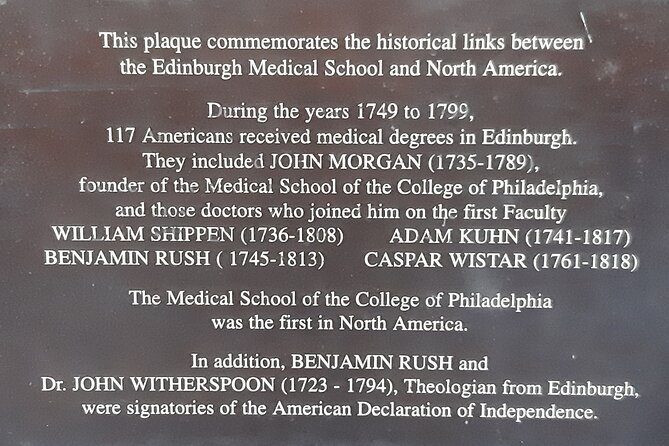
From Surgeons’ Hall, the tour continues to the University of Edinburgh, focusing on the medical school’s former home. This section gets you beyond institutions and into people—specifically medical students and the day-to-day reality of training.
You’ll hear more about Edinburgh’s growing importance as a medical center, but you’ll also hear about the drudgery and the compensations of medical student life. That combination is exactly what makes this stop valuable. It doesn’t paint students as either saints or villains. It treats training like what it is: long work, strict expectations, and a sense that you’re building skills that matter.
If you enjoy history that feels human, this is one of the best moments. You start to see the city as an educational engine. The guide ties the physical buildings to the study routines and the pressures students faced.
This also helps you understand why Edinburgh’s medical world became influential. It’s not only famous doctors. It’s the system that trained people and kept education evolving. Seeing that on the ground makes it easier to connect Edinburgh to the wider history of medicine in Europe.
A handful of other Edinburgh outings that caught our eye


Bristo Place and Darwin’s medical student lodgings
Next, you’ll pass Bristo Place, tied to Charles Darwin’s old med student lodgings. This is a short stop, but it’s a great “aha” moment because it links medicine with the wider story of science and curiosity.
Even though the tour isn’t a full Darwin deep-dive, the setting adds texture. You’re walking through ordinary streets where major figures once lived while doing ordinary student work—reading, learning, observing. That contrast is memorable, especially in a city where many buildings look grand from the outside but were lived in for study and routine on the inside.
This is also a nice breather from the heavier institutional details. It keeps the tour from becoming a straight line of buildings and instead reminds you that medical history is made by people with lives, schedules, and budgets. If you’ve ever wanted your historical walk to feel connected to culture (not just institutions), this stop delivers.
Lauriston Place finish: stories at the former Royal Infirmary gates
The tour culminates at Lauriston Place at the magnificent entrance plaza of the former Royal Infirmary. Finishing here feels right because it closes the loop: you started with the origins and training beginnings, and you end at the grand institutional endpoint.
This final stretch is about the doctors and surgeons associated with the Royal Infirmary, and the guide uses these stories to show how individual careers intersect with the institution’s role in healthcare. It’s a different flavor than the earlier stops. Less about “how it started” and more about “what it became,” and how that mattered for patients and for the medical profession.
Timing-wise, this end section is shorter than some middle stops, but it’s the right kind of finish. You’re not walking until your legs give out. You’re finishing with a strong location and a sense of closure. For photo lovers, it’s also a good final frame—an architectural send-off that makes the day feel like it had a real ending, not just a random stop.
If you’re planning your evening, this is a helpful detail: the Edinburgh Futures Institute has listed opening hours from 8:00 AM to 2:00 PM daily. Even if you don’t know when you’ll arrive exactly, you’ll want to plan for time in daylight.
Price and value: what you’re really paying for
At $130.44 per person for a 3 to 4 hour private walking tour, you’re paying for a guided, focused experience that combines street-level history with museum-style stops. The value pitch here isn’t just the price. It’s what’s included.
You get all guiding and commentary included, and the tour indicates admission ticket free at the stops along the way. That matters because it reduces the classic Edinburgh walking-tour problem: you end up paying separately, wasting time trying to sort out tickets, or losing your guide’s context. Here, you’re meant to keep moving and keep learning without extra friction.
You also get a mobile ticket and group discounts, plus the fact that it’s private means your time stays yours. On a theme tour like this, being able to ask questions and hear explanations tailored to your interests is a big deal. It’s not a random group shuffle where you can’t hear the guide.
Two practical notes on value and fit. First, it’s best when the weather is good, since it’s an outdoor walking route. Second, it’s about 2.5 miles total. That distance is manageable for many people, but you should treat it seriously. If you’re unsure, choose comfort over pride—better to pick a different Edinburgh day than to suffer through the middle blocks.
Who should book, and who should skip
This tour fits best if you want history tied to real buildings and real civic changes. You’ll probably enjoy it most if you like:
- medical history and the social side of who gets educated
- walking tours where the route is part of the story
- stories that connect famous names to everyday places
It’s also a smart pick for people who want an alternative to museum-only touring. The tour is grounded in institutions you can see and walk around, not just galleries.
Skip or reconsider if you have chronic and/or painful musculoskeletal issues. The tour is listed as not recommended for those conditions, and it’s roughly 2.5 miles on foot. If your legs feel okay for a steady walk, you’ll likely be fine. If you’re unsure, bring a backup plan for breaks.
Finally, this is private, and service animals are allowed, so it can work well for families or small groups who want control over the pace. Just remember it’s still a walking tour, so calm pace beats speed-run pacing.
Should you book this Edinburgh medical tour?
If you like your history specific—names, places, institutions, and the way systems changed over time—yes, I’d book it. The free-entry stops plus the guided storytelling make it a strong value for the time. And finishing at the former Royal Infirmary site gives the day a satisfying shape.
I’d hesitate only if you’re seeking a relaxed, sit-down tour. This one is built around walking and short stop durations, with about a 2.5 mile total route. If you can handle that, you’ll leave with a new way to read Edinburgh’s streets: not just beautiful stone, but a city where healthcare and education grew right in public view.
FAQ
How long is the Edinburgh medical and surgical private walking tour?
It’s listed as about 3 to 4 hours.
What does the tour cost?
The price is $130.44 per person.
Where do we meet, and where does the tour end?
You start at Hunter Square, Edinburgh EH1, UK. You end at Edinburgh Futures Institute, The University of Edinburgh, 1 Lauriston Pl, Edinburgh EH3 9EF, UK.
Is the tour private?
Yes. It’s a private tour/activity, and only your group participates.
Is the tour in English?
Yes, it’s offered in English.
Is admission included?
The tour notes Admission Ticket Free at each stop, and all guiding and commentary is included.
Is there a coffee or tea stop?
There is a refreshment cafe stop, but coffee and/or tea are not included.
How much walking is involved, and who should avoid it?
The route is about 2.5 miles. It’s recommended for travelers with moderate physical fitness, and it would not be recommended for persons with chronic and/or painful musculoskeletal health conditions.
What if the weather is bad?
The tour requires good weather. If it’s canceled due to poor weather, you’ll be offered a different date or a full refund.
Is a service animal allowed?
Yes, service animals are allowed.
Is free cancellation available?
Yes. You can cancel up to 24 hours in advance for a full refund.
More Walking Tours in Edinburgh
- Edinburgh: Harry Potter Magical Guided Walking Tour★ 4.8 · 11,944 reviews
- Edinburgh Castle: Guided Walking Tour with Entry Ticket★ 4.7 · 11,699 reviews
- Underground Vaults Walking Tour in Edinburgh Old Town★ 4.5 · 8,506 reviews
- Edinburgh Castle: Guided Walking Tour with Entry Ticket★ 5.0 · 5,540 reviews
- Edinburgh Castle Guided Walking Tour in English★ 5.0 · 5,214 reviews
More Tours in Edinburgh
- Edinburgh: Loch Ness, Glencoe & the Scottish Highlands Tour★ 4.6 · 17,446 reviews
- Edinburgh: Harry Potter Magical Guided Walking Tour★ 4.8 · 11,944 reviews
- Edinburgh: Underground Vaults Tour★ 4.6 · 11,758 reviews
- Edinburgh Castle: Guided Walking Tour with Entry Ticket★ 4.7 · 11,699 reviews
- From Edinburgh: Loch Ness, Glencoe & Scottish Highlands Tour★ 4.7 · 11,381 reviews
More Tour Reviews in Edinburgh
- Edinburgh: Loch Ness, Glencoe & the Scottish Highlands Tour★ 4.6 · 17,446 reviews
- Edinburgh: Harry Potter Magical Guided Walking Tour★ 4.8 · 11,944 reviews
- Edinburgh: Underground Vaults Tour★ 4.6 · 11,758 reviews
- Edinburgh Castle: Guided Walking Tour with Entry Ticket★ 4.7 · 11,699 reviews
- From Edinburgh: Loch Ness, Glencoe & Scottish Highlands Tour★ 4.7 · 11,381 reviews
Fresh off the cobbles: newer Edinburgh tours we have written up




Historical Tours, compared.
 ★ 4.8Edinburgh Castle Guided History Tour with TicketsFrom $499,933 reviews
 ★ 4.9Whisky Tasting with History and StorytellingFrom $242,451 reviews
 ★ 4.8Old Town History and Tales Walking TourFrom $242,361 reviews
 ★ 5.0Old Town Walking Tour History and Tales in EdinburghFrom $242,168 reviews
 ★ 4.5Old Town and Underground Historical TourFrom $271,802 reviews
 ★ 5.0Old Town Historical and Underground TourFrom $271,574 reviews
 ★ 4.5Multi-Sensory Small-Group Historic Vaults Tour in EdinburghFrom $371,384 reviews
 ★ 4.8Witches & Haunted History Walking TourFrom $241,290 reviews
Browse the lists this tour appears in