
Reviewed · EDINBURGH OLD TOWN WALKS
Edinburgh: Dean Village & New Town Walking Tour
Edinburgh has a split personality, and this walk shows both sides. I like how it starts in the quiet pocket of Dean Village and then shifts into the smart, planned streets of the New Town. I also love that the guide weaves architecture into real stories, from the Scottish Enlightenment to the city’s links to empire. One thing to consider: it is a walking tour with frequent stops, so if you want long time inside buildings, this may feel a bit fast.
The route is designed to help you get bearings fast without getting stuck in Old Town crowds. You’ll see the New Town grid, the open spaces, and crescents that make the city feel intentional, not random. You also get a steady stream of landmarks, like Scott Monument and Princes Street Gardens, plus a peek at why Edinburgh has a reputation for secretive drinking spots.
The best match is people who want context, not just photos. If you’re sensitive to walking on uneven ground around Dean Village, or if the weather is rough, plan on adjusting expectations and keep your shoes grippy.
In This Review
- Key highlights you will feel on the street
- A smart detour: how this route keeps you out of the center crush
- Dean Village: mill ruins, bread plaques, and a pause from the city
- Charlotte Square and the New Town’s neoclassical “stage set”
- The Georgian House moment: what high society living looked like
- Rose Street and the idea of secret bars in the New Town
- Castle Street and Princes Street views: the castle-rock perspective shift
- Scott Monument: a writer-sized landmark with a surprising fact
- George Street, statues, and the Neoclassical Dome break
- Melville and Dundas Houses: architecture shaped by colonial time
- Pace, timing, and what to expect on your feet
- Who this tour is best for (and who should choose differently)
- Should you book this Dean Village & New Town walking tour?
- FAQ
- How long is the Edinburgh Dean Village & New Town Walking Tour?
- How much does the tour cost?
- Where does the tour start and end?
- Is the tour guided, and how big are the groups?
- Do I need a printed ticket?
- Are there admission fees at the stops?
- What if the weather is bad?
- Can I cancel for a full refund?
Key highlights you will feel on the street
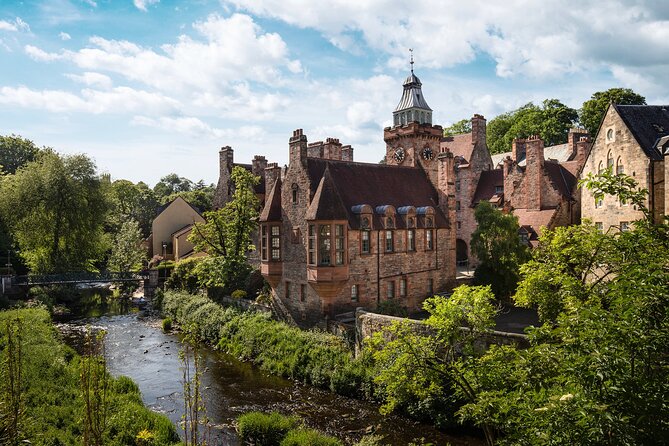
- Dean Village’s mill story: water mills, old stone features, and bread-themed details from a working past
- UNESCO New Town stops: Charlotte Square and the planned grid built for status and improvement
- Scottish Enlightenment connections: the big ideas tied to Edinburgh names like David Hume and Adam Smith
- Secret bars explained: why this city hid drinks in the New Town
- Monuments with meaning: Scott Monument plus views from Castle Street and the castle-rock angle
Keep exploring the Old Town on foot with these guided wanders.
- Underground Vaults Walking Tour in Edinburgh Old Town★ 4.5 · 8,506 reviews
- Edinburgh: Old Town History and Tales Walking Tour★ 4.8 · 2,361 reviews
- Old Town Walking Tour History and Tales in Edinburgh★ 5.0 · 2,168 reviews
- Edinburgh: Old Town and Underground Historical Tour★ 4.5 · 1,802 reviews
A smart detour: how this route keeps you out of the center crush
Edinburgh can be a lot, especially if you bounce between Old Town lanes all day. This tour gives you a different rhythm: calmer streets first, then a more formal, elegant side of the city that feels like it was designed on purpose. You get the sense of Edinburgh as a thinking city, not just a scenery city.
At $27.37 for about 2 hours 15 minutes, you are paying for guided context and a smooth, small-group route (max 20). That’s good value here because the New Town details are easier to notice when someone points out what you are looking at and why it matters. It is also capped small, so you can ask questions without shouting.
Dean Village: mill ruins, bread plaques, and a pause from the city
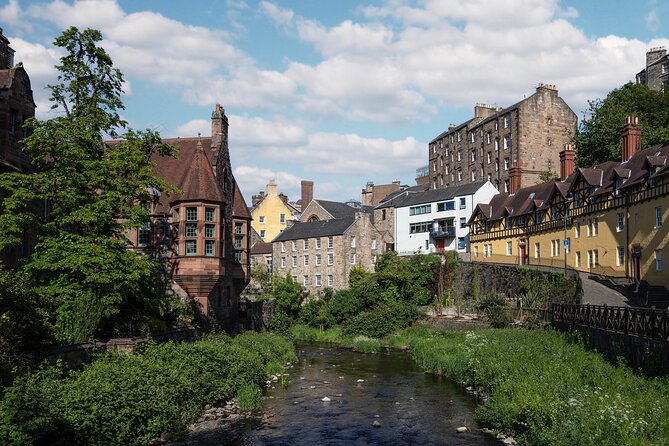
Dean Village is where the walk turns from city energy into something calmer. It sits just a few steps away from Princes Street, yet it feels like you crossed into a quieter pocket of Edinburgh. The tour starts right at the Dean Village meeting point, so you do not waste time in transit.
This part of the route focuses on the village’s medieval role as a working bakers hub. You’ll get to see remaining mill stones and stone plaques decorated with baked bread and pies. That’s the kind of detail that clicks in your brain because it connects the buildings to everyday labor, not just fancy façades.
A small drawback: Dean Village is picturesque, but it is still a real neighborhood. Expect some uneven sidewalks and watch your footing when you stop for photos.
Charlotte Square and the New Town’s neoclassical “stage set”
After Dean Village, you shift into the New Town, which is a UNESCO World Heritage area. The change is immediate: wider streets, cleaner geometry, and viewpoints that make the city feel like it has an order. The stop at Charlotte Square is where that design becomes obvious.
Here you’ll admire neoclassical architecture and learn why Edinburgh gets labeled the Athens of the North. This matters because it’s not just a slogan. The New Town layout reflects the Scottish Enlightenment mindset: ideas, progress, and public life shaped by thoughtful planning.
You’ll also pause outside a major address in the square for a quick orientation of the area. That short stop style is useful when you only have a couple of hours total.
The Georgian House moment: what high society living looked like
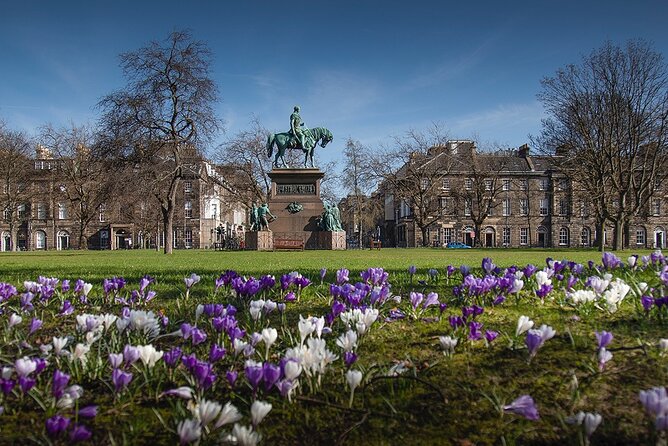
In Charlotte Square, the tour pauses at the Georgian House linked to the National Trust for Scotland. Even if you do not go inside, standing outside is still valuable because the architecture tells you a lot about status. In 18th and 19th century Edinburgh, a home like this was less about being private and more about being seen.
The guide’s focus here is life in a Georgian house: what mattered, how people lived, and why the New Town became the place to be. If you are interested in how the wealthy shaped the city’s look and rules, this stop lands well.
One consideration: the plan says you stop outside, and if the building is open you may step in. So do not count on inside time every day.
A handful of other Edinburgh outings that caught our eye



Rose Street and the idea of secret bars in the New Town
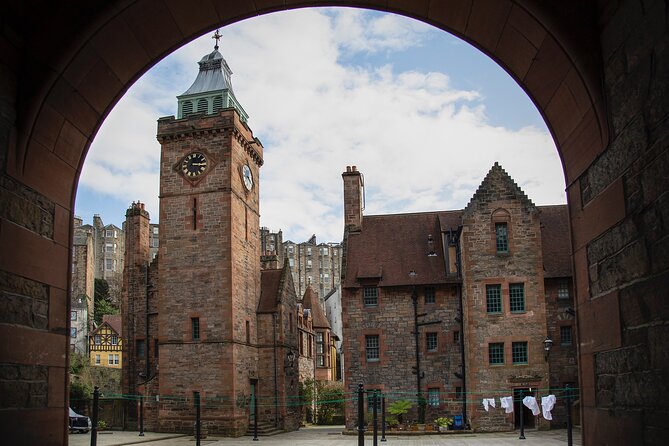
From Charlotte Square, you head into the New Town grid and down Rose Street, which is famous for pubs. This is also where the tour gets more playful and slightly mysterious. You’ll hear the reason behind the establishment of secret bars in the New Town.
Even if you are not usually a trivia person, I like this kind of story because it shows how social life worked in a city with strict manners. Edinburgh’s public face could be formal, while everyday relaxation still needed room to breathe. That tension is part of what makes the city feel human, not museum-like.
Practical note: Rose Street is busy at many hours, so keep an eye on where your group gathers when the guide is explaining details.
Castle Street and Princes Street views: the castle-rock perspective shift
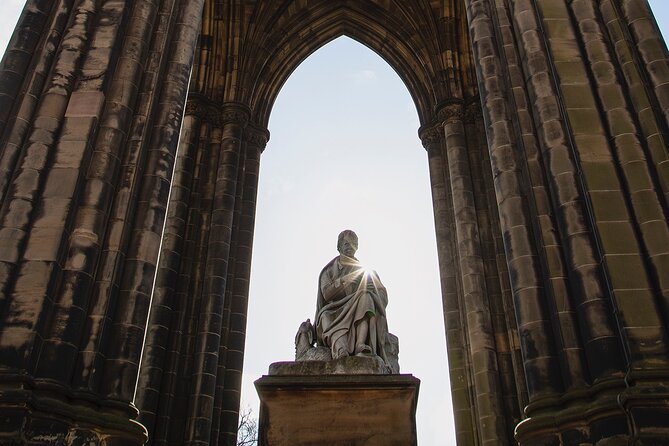
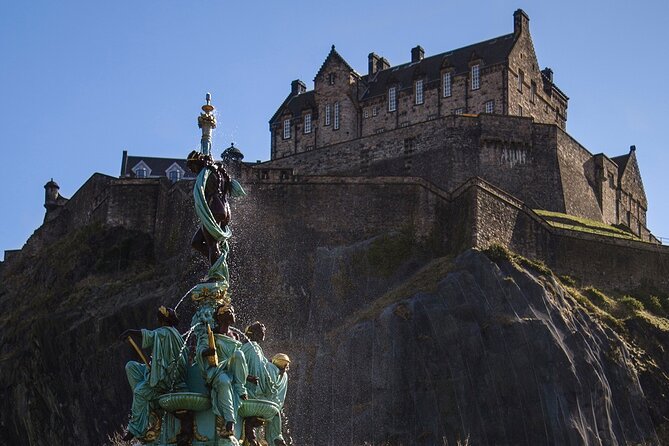
Next up is Castle Street, with a view that helps you understand Edinburgh’s geography. From here you get a strong look toward the castle and the castle rock. It’s a quick stop, but it matters because it changes how you place everything you see later.
After crossing, you move into Princes Street Gardens, one of Edinburgh’s main parks. This is where the tour gives you a “pause and look” moment, plus a stop for examples of public art. The castle view from the gardens is classic for a reason: it ties the planned New Town to the older, dramatic power center above.
Short stop timing is the tradeoff. You get the key angles and context, but you will not linger long enough to turn this into a sit-down picnic break.
Scott Monument: a writer-sized landmark with a surprising fact
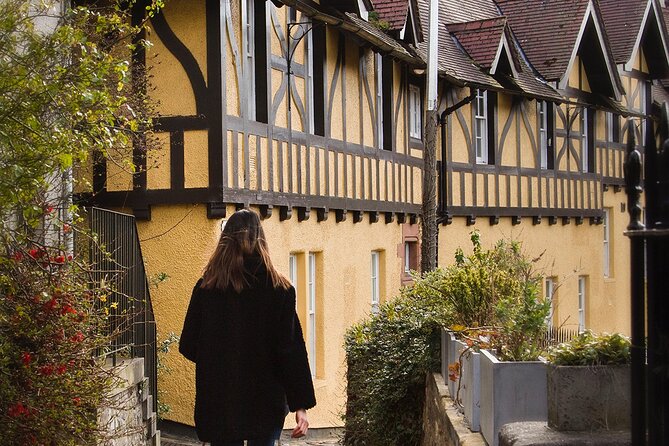
From Princes Street Gardens, you head toward the Scott Monument, a major Edinburgh landmark. The guide covers its history and architecture, and you’ll hear a standout fact: it is the largest monument in the world dedicated to a writer. That detail is exactly the kind of thing that makes you notice the monument differently after the explanation.
This stop works especially well if you like connecting art and ideas. Edinburgh’s “thinking city” reputation isn’t just academic—it’s carved into stone and public memory. Walter Scott’s presence in the center of things is a good example of literature shaping civic identity.
George Street, statues, and the Neoclassical Dome break
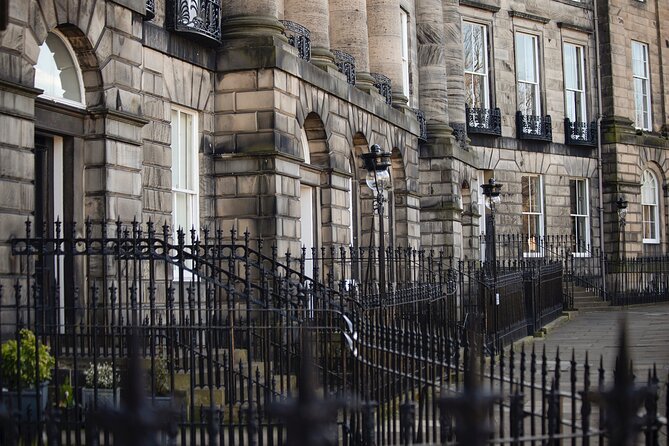
You return to the New Town grid and walk the east end of George Street. This stretch is known for cafes, restaurants, and shops, and it also has statues tied to notable figures. The tour specifically points out statues dedicated to King George IV and James Clerk Maxwell.
Why that matters: it’s a quick way to connect science and empire with the city’s public spaces. Maxwell’s story fits the Scottish Enlightenment theme, while the king’s statue reminds you that British power and Edinburgh’s prominence moved together.
Just around the corner near Rose Street, you also see impressive neoclassical buildings like the Dome. It’s a short stop, but the exterior view helps you understand the New Town’s style without needing museum tickets.
Melville and Dundas Houses: architecture shaped by colonial time
The walk closes with monuments and buildings that point directly to Britain’s colonial era. At St. Andrews Square, you’ll reach the Melville Monument and learn why it was built and its connection to British colonial time. This is the portion of the tour that adds bite. It stops you from romanticizing the city as only clever and cultured.
Across the street, you see Dundas House, and the guide explains a detail that instantly makes it feel real: the architect drew inspiration from Andrea Palladio, the Italian Renaissance architect. The building is today used as a bank, and if it is open you may step inside. Either way, the external architecture is the main point—how Renaissance ideals got adapted for Edinburgh’s ambitions.
This ending is strong because it ties everything together: ideas, design, and power. You finish with the feeling that Edinburgh’s beauty has structure behind it, not just luck.
Pace, timing, and what to expect on your feet
This tour runs about 2 hours 15 minutes and is built around short stops. That means you will move at a steady walking pace, then pause long enough for the key stories. With a max group size of 20, you should not feel packed in, but it still helps to keep your phone handy for quick photo moments.
Because Dean Village and the New Town involve real sidewalks and streets, bring comfortable shoes. The tour also requires good weather, so if it’s raining hard, expect the operator to adjust plans and you may get another date or a full refund offer.
You’ll also use a mobile ticket, which is easy—no need to hunt for a paper printout in your day bag.
Who this tour is best for (and who should choose differently)
This fits best if you already saw a bit of Old Town and want the New Town side to make sense. If you care about architecture, you’ll enjoy the neoclassical focus at Charlotte Square and the way the tour explains what Georgian living meant. If you like story-driven history, the Scottish Enlightenment names—David Hume, Adam Smith, and Arthur Conan Doyle—give the tour a memorable anchor.
It may not be ideal if you want long, unhurried museum time or you hate walking. The stops are quick by design, and you will be on your feet for the entire experience.
If your guide is Irene (as some groups have shared), you should expect a friendly, engaging style that makes short facts feel like a guided conversation.
Should you book this Dean Village & New Town walking tour?
I’d book it if you want a smart mix of calm streets and big-city ideas, all in one afternoon block. The price is reasonable for a guided route that connects UNESCO architecture, Georgian living, Enlightenment thinkers, and even the city’s darker side through colonial-linked monuments.
Skip it if you prefer to explore purely at your own pace or if you cannot manage a walking tour with frequent short stops. Otherwise, this is a solid way to see a less over-exposed slice of Edinburgh and leave with stories that make the buildings click.
FAQ
How long is the Edinburgh Dean Village & New Town Walking Tour?
It’s approximately 2 hours 15 minutes.
How much does the tour cost?
The price is listed as $27.37 per person.
Where does the tour start and end?
It starts at 2–4 Hope St, Edinburgh EH2 4DB, UK and ends outside Dundas House, St. Andrews Square (Edinburgh EH2 2YB, UK).
Is the tour guided, and how big are the groups?
Yes, it includes a local tour guide, and the maximum group size is 20 travelers.
Do I need a printed ticket?
No. The tour uses a mobile ticket.
Are there admission fees at the stops?
The itinerary lists admission ticket free for each stop.
What if the weather is bad?
The experience requires good weather. If it’s canceled due to poor weather, you’ll be offered a different date or a full refund.
Can I cancel for a full refund?
Yes. You can cancel up to 24 hours in advance for a full refund. Canceling less than 24 hours before does not get refunded.
More Tours in Edinburgh
- Edinburgh: Loch Ness, Glencoe & the Scottish Highlands Tour★ 4.6 · 17,446 reviews
- Edinburgh: Harry Potter Magical Guided Walking Tour★ 4.8 · 11,944 reviews
- Edinburgh: Underground Vaults Tour★ 4.6 · 11,758 reviews
- Edinburgh Castle: Guided Walking Tour with Entry Ticket★ 4.7 · 11,699 reviews
- From Edinburgh: Loch Ness, Glencoe & Scottish Highlands Tour★ 4.7 · 11,381 reviews
More Tour Reviews in Edinburgh
- Edinburgh: Loch Ness, Glencoe & the Scottish Highlands Tour★ 4.6 · 17,446 reviews
- Edinburgh: Harry Potter Magical Guided Walking Tour★ 4.8 · 11,944 reviews
- Edinburgh: Underground Vaults Tour★ 4.6 · 11,758 reviews
- Edinburgh Castle: Guided Walking Tour with Entry Ticket★ 4.7 · 11,699 reviews
- From Edinburgh: Loch Ness, Glencoe & Scottish Highlands Tour★ 4.7 · 11,381 reviews
Still Wandering the Old Town
- Underground Vaults Walking Tour in Edinburgh Old Town★ 4.5 · 8,506 reviews
- Edinburgh: Old Town History and Tales Walking Tour★ 4.8 · 2,361 reviews
- Old Town Walking Tour History and Tales in Edinburgh★ 5.0 · 2,168 reviews
- Edinburgh: Old Town and Underground Historical Tour★ 4.5 · 1,802 reviews
- Edinburgh: Old Town and Underground Ghost Tour★ 4.4 · 1,768 reviews
Fresh off the cobbles: newer Edinburgh tours we have written up






Edinburgh Old Town Walks, compared.
 ★ 4.5Underground Vaults Walking Tour in Edinburgh Old TownFrom $338,506 reviews
 ★ 4.8Old Town History and Tales Walking TourFrom $242,361 reviews
 ★ 5.0Old Town Walking Tour History and Tales in EdinburghFrom $242,168 reviews
 ★ 4.5Old Town and Underground Historical TourFrom $271,802 reviews
 ★ 4.4Old Town and Underground Ghost TourFrom $221,768 reviews
 ★ 4.6Dark Secrets of the Old Town Ghost Walking TourFrom $241,671 reviews
 ★ 5.0Royal Mile and Old Town Walking TourFrom $481,596 reviews
 ★ 5.0Old Town Historical and Underground TourFrom $271,574 reviews
Browse the lists this tour appears in