
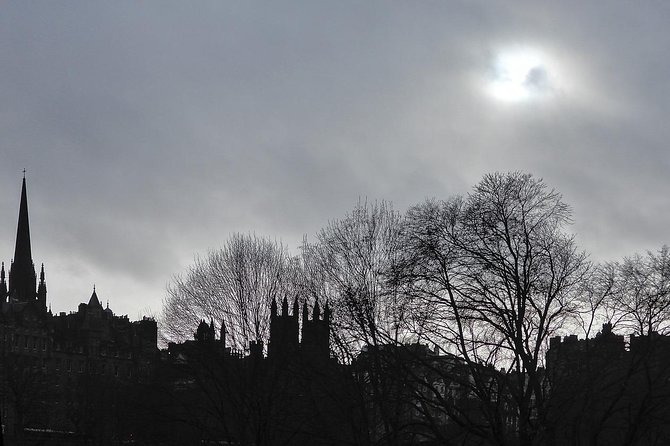
Reviewed · GHOST & UNDERGROUND VAULTS
Edinburgh – Dark History
Dark stories, right on the Royal Mile. This Edinburgh Dark History walking tour ties punishment sites, plague-era conditions, and graveyard legends to buildings you’ll actually pass on foot, with guides who turn local landmarks into a clear timeline. I love how the route keeps you focused along the Royal Mile, instead of bouncing around the map.
I also like the practical value: each named stop is marked with admission ticket free, so your $22.19 budget mostly supports the guide and storytelling. Plus, it’s in English with a mobile ticket, and the group stays small (up to 30).
One thing to consider: the tour runs about two hours in total, and on a cold, wet evening a couple of stops may feel a bit long. The vibe isn’t scary-movie gore for its own sake; it’s more real history with dark themes.
In This Review
- Key highlights you’ll notice fast
- Why this Edinburgh Dark History walk works on the street
- Getting oriented: start, end, time, and walking reality
- Heart of Midlothian: the Old Tollbooth and the story behind the pavement heart
- St Giles Cathedral: the hidden-feeling side of a famous church
- Mercat Cross: a civic monument with a truly grim job
- The Royal Mile segment: plague, sanitation, and the traditions people still repeat
- John Knox House Museum: 16th-century architecture amid the noise
- Canongate Kirk: graves, body-snatching rumors, cannibals, and ghost-story origins
- The guide factor: what makes the storytelling land
- Price and value: is $22.19 a good deal for 2 hours?
- Who should book this Edinburgh Dark History tour?
- Should you book it?
- FAQ
- How long is the Edinburgh Dark History walking tour?
- How much does the tour cost?
- What language is the tour offered in?
- Do I need to print anything, or can I use a mobile ticket?
- Where does the tour start and end?
- Are there any admission tickets required at the stops?
- How large is the group?
- Is it near public transportation?
- Are service animals allowed?
- What is the cancellation policy?
Key highlights you’ll notice fast
- Royal Mile route with a tight focus on law, punishment, and how local legends formed
- Free-entry stops at major Old Town sites, so the cost stays predictable
- St Giles Cathedral and Mercat Cross connected to executions and the city’s justice system
- Plague and sanitation context that explains why certain traditions grew out of bad conditions
- Canongate Kirk’s graveyard stories that cover body-snatching rumors, cannibal stories, and the origins of ghost tales
- Storytelling with personality—guides like Robert, Joe, James, Kieran, Lydia, and Chris are repeatedly praised for humor and strong pacing
Not spooked yet? More vaults, closes and ghost walks beneath the Old Town.
- Edinburgh: Underground Vaults Tour★ 4.6 · 11,758 reviews
- The World Famous Underground Ghost Tour★ 4.5 · 9,272 reviews
- Underground Vaults Walking Tour in Edinburgh Old Town★ 4.5 · 8,506 reviews
- Edinburgh: Late-Night Underground Vaults Terror Tour★ 4.6 · 4,162 reviews
Why this Edinburgh Dark History walk works on the street
Edinburgh’s Old Town looks beautiful in daylight, but the same streets make more sense once you know how punishment, illness, and rumor shaped everyday life. This tour leans into that idea: you’re not touring a museum with glass cases. You’re walking through the places where the city’s worst days played out, and the guide connects details to what you can see in front of you.
I like that the stories are anchored. Heart of Midlothian is a real landmark, not a vague reference. St Giles Cathedral is the real setting for secret corners and buried figures. Mercat Cross isn’t just an address—it’s the kind of civic focal point where fear could become a public routine. And that’s what makes this sort of tour worth your time: you leave with a mental map of the Old Town’s dark chapters.
Getting oriented: start, end, time, and walking reality
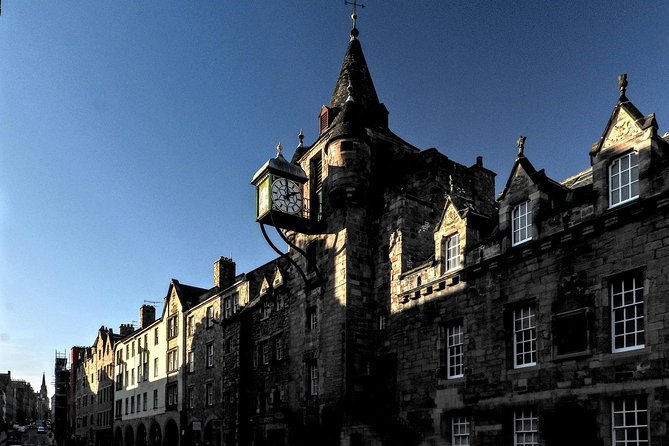
The tour starts at West Parliament Square (W Parliament Sq, Edinburgh EH1 1RF) and ends at Canongate Kirk (153 Canongate, Edinburgh EH8 8BN). It’s offered in English, uses a mobile ticket, and runs about 2 hours.
Group size is capped at 30, and from the way guides are described, smaller groups can feel easier to hear and follow on a busy Royal Mile day. You should still expect an active walking tour. One review mentioned decent walking distance and only a single flight of stairs—so it may suit many people who want a solid walking experience without extreme climbs.
If you’re planning around weather, Scotland has opinions. This tour lasts long enough that being cold and damp can affect how much you enjoy the storytelling. Bring layers you can tolerate for a full two hours, and wear shoes with decent grip on Old Town stone.
Heart of Midlothian: the Old Tollbooth and the story behind the pavement heart

Your first big stop is Heart of Midlothian, tied to the former Old Tollbooth—one of Edinburgh’s notorious buildings. This is where you learn the difference between a symbol and the place it points to. The guide explains how the city treated lawbreakers with harsh public consequences, including stories of people once imprisoned and/or executed there.
Then comes the cultural twist that Edinburgh does so well: the site’s identity became famous through Sir Walter Scott, who helped recognize it as the Heart of the Midlothian in his work (the wording Scott used is often repeated in local storytelling). It’s a good early stop because it reframes the whole walk. You start seeing the Old Town as a living archive: even modern street markings can carry centuries-old meaning.
What to watch for: if you’re new to Edinburgh, this is a moment to pause and look around the street scene. It helps you understand how the city kept going while punishment history faded into “just another corner.”
St Giles Cathedral: the hidden-feeling side of a famous church
Next up is St Giles’ Cathedral, where the tour highlights something that doesn’t always register at first glance. Even if you’re passing by what looks like ordinary ground, there are secrets in the layout and the way the site holds memory.
This stop also points you to a key aspect of Edinburgh’s dark past: burials and reputations can be political. The tour notes that St Giles is the burial place of one of the most controversial figures in Scottish history. (The figure’s name isn’t provided in the tour details you shared, so keep your ear open for your guide’s specific identification during the walk.)
Why this stop matters: churches weren’t just places for worship. In cities like Edinburgh, they also became locations where society recorded who mattered and how the past should be interpreted.
Possible drawback: cathedral-time is short here (around 10 minutes). If you want lots of quiet reading and slow photo time, you may have to trade that for the storytelling pace.
A handful of other Edinburgh outings that caught our eye


Mercat Cross: a civic monument with a truly grim job
The tour then moves to Mercat Cross, described as another infamous execution site. This is where the guide makes you think about the city’s “public space” in a different way: civic landmarks weren’t neutral. They were stages.
You’ll hear why Mercat Cross mattered in daily life and how the idea of justice became visible. The tour also references a literal killing machine once kept inside St. Giles Cathedral. That’s one of those details that changes how you interpret the area—suddenly the buildings around you don’t feel like background. They feel like equipment for how the city enforced order.
What to expect: more context than gore. Even with dark themes, guides are praised for setting the scene and humanizing the people involved, so you’re learning how systems worked, not just collecting shock stories.
The Royal Mile segment: plague, sanitation, and the traditions people still repeat
The longest stretch is the walk down the Royal Mile, about 40 minutes. This is the section where the guide connects the big themes: notorious citizens, the Black Plague, and how poor sanitary conditions shaped how people lived.
One detail worth paying attention to is how the tour frames the “peculiar tradition” that grew out of those conditions. The tour description doesn’t name the tradition in the info you provided, so your guide’s explanation will matter here. Either way, the lesson is clear: when disease and dirt were normal, habits became rules—sometimes weird ones that survived long after the original reasons faded.
Tip for getting more out of this part: look up as you walk. The Royal Mile is all lines and levels—closes, tenements, and street rhythms. When the guide links plague-era conditions to what you’re seeing, the street turns into evidence.
John Knox House Museum: 16th-century architecture amid the noise
Stop 5 is John Knox House Museum, with about 5 minutes set aside. This is a short, fast pivot from punishment legends to physical place: the tour highlights the architecture of 16th-century Edinburgh and points out what’s described as one of the most “authentic” corners in the city centre.
Even if you don’t go into museum-mode, this moment helps balance the tour. It reminds you that the city’s dark chapters were happening inside buildings made for survival—narrow, steep, and shaped by the way people actually lived.
What this stop is good for: slowing your brain down for a second. After executions and graveyard stories, architecture gives you something solid to remember.
Canongate Kirk: graves, body-snatching rumors, cannibals, and ghost-story origins
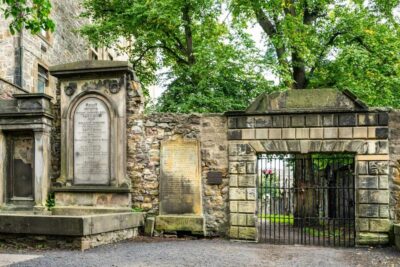
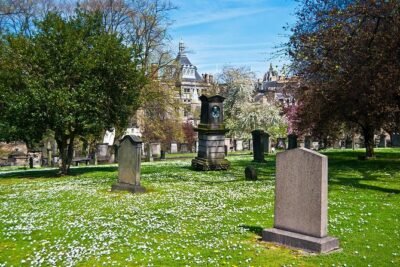
You end at Canongate Kirk, with about 40 minutes focused on the graveyard and the stories connected to it. The tour notes a range of grim themes: body snatchers, cannibals, and how ghost stories are born.
This is one of the stops where the tour’s tone matters. It’s not marketed as a jump-scare ghost walk. Instead, it treats ghost stories like folklore with roots—often in fear, rumor, and the way people tried to explain death and missing bodies.
Why you’ll probably remember this ending: you finish in a place that feels like it holds quiet. Even if the topic is unsettling, the setting helps you think. The last stretch is often where guides make their best connections—tying earlier punishment and plague-era themes to what people did with uncertainty after the fact.
The guide factor: what makes the storytelling land
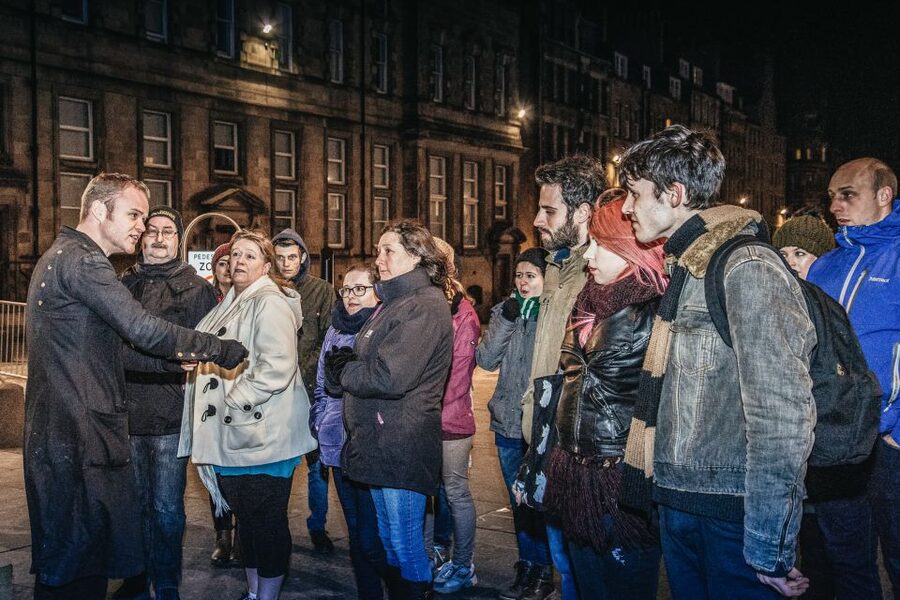
This kind of tour lives or dies on the guide’s pacing and voice. The names that show up again and again—Robert, Joe, James, Kieran, Lydia, and Chris—are credited with energy, humor, and detailed storytelling that makes the city feel like a real stage.
A few specific qualities stand out from the way guides are described:
- Humor that keeps dark topics from turning into a lecture
- Strong scene-setting, so you can picture what happened at each place
- Clean pacing that keeps the group moving even when the weather is rough
- Small added touches, like one guide who included a harmonica during the walk
If you prefer a tour with some audience back-and-forth, do note that not every departure offers lots of interaction. Most people will still hear everything clearly as the route flows.
Price and value: is $22.19 a good deal for 2 hours?
At $22.19 per person, this isn’t a huge splurge, and that’s the point. Your value comes from a few things that fit together well:
- A 2-hour guided walk with multiple major Old Town stops
- Admission ticket free listed for the stops in the route details you provided
- A mobile ticket that keeps logistics simple
- A small maximum group size (up to 30), which helps the experience feel personal enough to follow
In plain terms, you’re paying for expert narration at places you’d otherwise just pass. If you like true local facts, civic history, and the way legends get attached to real buildings, the price makes sense.
If you only want spooky atmosphere and nothing factual, you may find yourself wishing for more pure horror. This one leans historical and grounded.
Who should book this Edinburgh Dark History tour?
Book it if you:
- Want an Old Town walking experience that connects landmarks to real events
- Enjoy crime-and-punishment history and the folklore that grew around it
- Like hearing how fear, disease, and politics showed up in everyday city life
- Prefer nighttime or dim-light atmosphere, since multiple guides are praised for how the evening tone works with the material
- Want a manageable walking tour (mostly level Old Town streets, with limited climbing noted)
Skip it if you:
- Want a long museum-style visit at each stop (this is fast and story-led)
- Dislike walking in cold weather and rain—layers matter
- Only want a classic ghost tour with spooky surprises rather than folklore origins and documented context
Should you book it?
Yes, I’d book this if you want Edinburgh’s dark side explained through real addresses and specific civic sites, with guides who keep it lively and readable on the move. The route makes the Royal Mile feel like a map of stories, and the free-entry stops help keep the overall spend sensible.
If you’re deciding between this and a lighter history walk, choose this one when you’re in the mood for grit with context. If you’re looking for pure fun or zero discomfort in the weather, pick a shorter daytime option instead.
FAQ
How long is the Edinburgh Dark History walking tour?
It lasts about 2 hours.
How much does the tour cost?
The price is $22.19 per person.
What language is the tour offered in?
The tour is offered in English.
Do I need to print anything, or can I use a mobile ticket?
You’ll have a mobile ticket.
Where does the tour start and end?
It starts at West Parliament Square (W Parliament Sq, Edinburgh EH1 1RF) and ends at Canongate Kirk (153 Canongate, Edinburgh EH8 8BN).
Are there any admission tickets required at the stops?
The stops listed in the route show admission ticket free.
How large is the group?
The tour has a maximum of 30 travelers.
Is it near public transportation?
Yes, it’s near public transportation.
Are service animals allowed?
Yes, service animals are allowed.
What is the cancellation policy?
You can cancel for a full refund up to 24 hours before the experience’s start time, with free cancellation listed as available.
More Historical Tours in Edinburgh
- Edinburgh: Edinburgh Castle Guided History Tour with Tickets★ 4.8 · 9,933 reviews
- Edinburgh: Whisky Tasting with History and Storytelling★ 4.9 · 2,451 reviews
- Edinburgh: Old Town History and Tales Walking Tour★ 4.8 · 2,361 reviews
- Old Town Walking Tour History and Tales in Edinburgh★ 5.0 · 2,168 reviews
- Edinburgh: Old Town and Underground Historical Tour★ 4.5 · 1,802 reviews
More Tour Reviews in Edinburgh
- Edinburgh: Loch Ness, Glencoe & the Scottish Highlands Tour★ 4.6 · 17,446 reviews
- Edinburgh: Harry Potter Magical Guided Walking Tour★ 4.8 · 11,944 reviews
- Edinburgh: Underground Vaults Tour★ 4.6 · 11,758 reviews
- Edinburgh Castle: Guided Walking Tour with Entry Ticket★ 4.7 · 11,699 reviews
- From Edinburgh: Loch Ness, Glencoe & Scottish Highlands Tour★ 4.7 · 11,381 reviews
Deeper Into Haunted Edinburgh
- Edinburgh: Underground Vaults Tour★ 4.6 · 11,758 reviews
- The World Famous Underground Ghost Tour★ 4.5 · 9,272 reviews
- Underground Vaults Walking Tour in Edinburgh Old Town★ 4.5 · 8,506 reviews
- Edinburgh: Haunted Underground Vaults and Graveyard Tour★ 4.6 · 6,607 reviews
- Edinburgh: Late-Night Underground Vaults Terror Tour★ 4.6 · 4,162 reviews
Fresh off the cobbles: newer Edinburgh tours we have written up






Ghost & Underground Vaults, compared.
 ★ 4.6Underground Vaults TourFrom $3211,758 reviews
 ★ 4.5The World Famous Underground Ghost TourFrom $269,272 reviews
 ★ 4.5Underground Vaults Walking Tour in Edinburgh Old TownFrom $338,506 reviews
 ★ 4.6Haunted Underground Vaults and Graveyard TourFrom $326,607 reviews
 ★ 4.6Late-Night Underground Vaults Terror TourFrom $354,162 reviews
 ★ 4.7Real Mary King’s Close Guided TourFrom $383,950 reviews
 ★ 4.4Comedy Horror Ghost Bus TourFrom $283,932 reviews
 ★ 5.0Edinburgh Darkside Walking Tour: Mysteries, Murder and LegendsFrom $293,862 reviews
Browse the lists this tour appears in