
Reviewed · HISTORICAL TOURS
A History of Witchcraft in Edinburgh: A Self-Guided Audio Tour
Witches in Edinburgh feel close enough to touch. This self-guided audio tour links famous landmarks to the stories behind accusations and punishment, as you walk the Royal Mile up toward Castle Hill. It’s a simple plan: put on your headphones, follow clear directions, and let the narration do the heavy lifting.
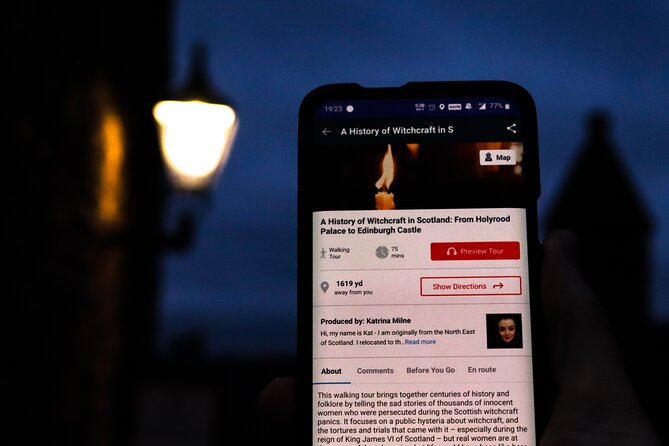
Two things I really like are the storytelling tone and the way the facts stay readable. The narration is professional and high quality, and it avoids getting stiff or overly textbook. Another big plus is offline access: you get audio plus maps and geodata through the VoiceMap app, so you’re not hunting for signal while you’re outside.
One consideration: you’ll need your own smartphone and headphones, and the route finishes with an uphill climb to the top of Castlehill. If you’re sensitive to hills, plan for a slower pace and more pauses for photos and street views.
In This Review
- Key highlights you’ll care about
- A self-guided audio tour that keeps its feet on the ground
- Price and what $9.99 actually buys you
- Where it starts and how long you should plan
- Stop by stop: how the route tells the witchcraft story
- Outside the Palace of Holyrood: setup and first context
- The Royal Mile stretch toward Castle Hill: the spine of the walk
- Passing the Scottish Parliament: modern checkpoints over old narratives
- Bake House Close: a close street that changes the mood
- John Knox House: the Scottish Witchcraft Act connection
- High Street toward St Giles: the shift to confession and punishment
- Victoria Terrace and the Wizard of West Bow story
- Ending at Castle Hill: the last witch of Scotland
- What makes the narration work so well
- Walking comfort and who this suits best
- Should you book this Edinburgh witchcraft audio tour?
- FAQ
- FAQ
- How long is the self-guided audio tour?
- Where does the tour start and end?
- What does the tour cost?
- What app do I need for the tour?
- Can I download it for offline use?
- Do I need a smartphone and headphones?
- Is the tour guided by a person?
- Are tickets or museum entries included?
- What language is the tour offered in?
- Is the experience refundable if I cancel?
Key highlights you’ll care about
- Professional narration (Kat): clear, sensible storytelling instead of dry facts.
- Offline-ready VoiceMap: audio, maps, and geodata are included for use on the walk.
- A tight, landmark-based route: Holyrood to Castle Hill with stops that match the themes.
- Real places tied to witchcraft enforcement: including John Knox House and St Giles Cathedral’s surroundings.
- Concrete directions: the tour guides you step-by-step through major streets and closes.
- Value pricing: $9.99 for lifetime access to the tour in English.
A handful of other Edinburgh outings that caught our eye
- Edinburgh: Harry Potter Magical Guided Walking Tour★ 4.8 · 11,944 reviews
- Edinburgh Castle: Guided Walking Tour with Entry Ticket★ 4.7 · 11,699 reviews
- Edinburgh: Edinburgh Castle Guided History Tour with Tickets★ 4.8 · 9,933 reviews
- Edinburgh Castle: Guided Walking Tour with Entry Ticket★ 5.0 · 5,540 reviews
A self-guided audio tour that keeps its feet on the ground
This experience is built for a walk where you still get your bearings. You start at the Palace of Holyrood area, then move along the Royal Mile corridor up to Castle Hill. The audio doesn’t ask you to figure out history first; it meets you where you are and gives context as you pass each key spot.
The biggest practical win is how VoiceMap Audio Tours is set up for real streets. You get lifetime access to the tour in English, plus offline access to audio, maps, and geodata. That means you can download your content before you go and rely on the route even when your phone signal gets patchy.
It’s also priced to fit a “do one smart thing” day. At $9.99 per person, you’re paying for the convenience of a guided-feeling walk without adding museum tickets or booked group time. For many visitors, that’s a good trade: you’re spending money on context, not on extras.
Price and what $9.99 actually buys you
At $9.99 per person for a 1 to 1.5 hour self-guided experience, the value comes from three things you won’t easily replicate on your own without planning:
- Lifetime access: you can replay it later, or use it if you wander a different pace through the center.
- Offline maps and geodata: you’re not just buying narration; you’re buying navigational help.
- No entry fees required en route: there’s no included museum ticket baked into the price.
So yes, it’s cheap compared to a guided tour with a human guide. But it’s also not “just a short audio clip.” The route is mapped across major Edinburgh locations tied to the witchcraft theme, and it runs long enough to feel like a real mini-walk across the city core.
The only cost you must bring yourself is obvious and important: a smartphone and headphones. They’re not included, and this kind of audio tour lives or dies on having comfortable listening gear.
Where it starts and how long you should plan
The start is Edinburgh EH8 8DU, outside the Palace of Holyrood area. The tour ends at the top of Castlehill, right before the Esplanade, at Esplanade, Edinburgh EH1.
Time-wise, plan for about 1 hour to 1 hour 30 minutes. That range is realistic because you’ll naturally slow down for street views, reading the surroundings, and listening to full segments. If you pause often for photos, add a bit more.
The schedule is also generous: it’s listed as available Monday through Sunday from 12:00 AM to 11:59 PM during the date window shown. In plain terms, you can pick a time that fits your day without feeling rushed by strict tour hours.
Stop by stop: how the route tells the witchcraft story
The tour follows a clear arc: start in the Holyrood area, work your way along the Royal Mile toward Castle Hill, and build the theme as you move through streets, closes, and cathedral surroundings. Here’s how each key part works and what to expect.
A handful of other Edinburgh outings that caught our eye
Outside the Palace of Holyrood: setup and first context
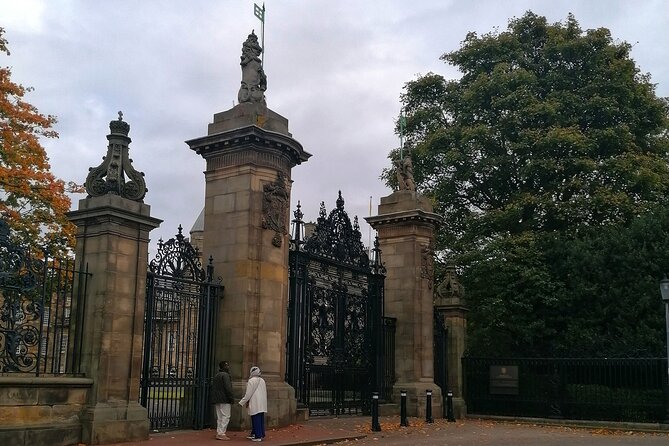
You begin outside the Palace of Holyrood, and the early audio focuses on how to use the app and what you’re about to experience. It’s a good start because it helps you get oriented before the theme turns darker.
Practical tip: once you start walking, keep your phone accessible. Even with offline maps, you’ll want to glance at the screen quickly if you miss a turn. The narration format is designed to let you follow without stopping constantly, but you’ll move faster if you’re comfortable with the app.
The Royal Mile stretch toward Castle Hill: the spine of the walk
As you continue along the Royal Mile from Holyrood House toward the top of Castle Hill, you’re getting the “spine” of the route. This is where the audio starts shaping connections between power, fear, and law—without requiring you to memorize dates.
This portion is also where you’ll feel the city’s scale. Edinburgh’s Old Town streets can trick you into thinking they’re short until you’re walking them. The good news is that the audio keeps you moving with purpose, so you don’t just drift through look-but-don’t-learn sightseeing.
Passing the Scottish Parliament: modern checkpoints over old narratives
You’ll pass the Scottish Parliament as part of the walking path. The tour uses this moment to ground you: you’re moving through a city where government buildings and public life still matter, even when the subject is centuries-old witchcraft law and enforcement.
This stop works well if you like history that connects to what you see right now. It’s not just spooky storytelling; it’s a reminder that institutions and rules affect real people.
If you’re traveling with limited time, this kind of stop is a smart one. You get a quick “why this place matters” without adding extra walking loops.
Bake House Close: a close street that changes the mood
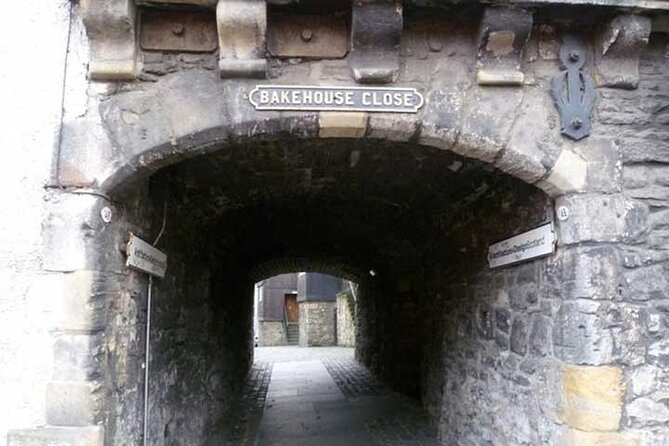
Next you head into Bake House Close. Closes in Edinburgh are narrow, older passageways that feel removed from the main street noise. That physical change helps the audio theme land—witchcraft stories were carried through rumor, fear, and small-scale local encounters as much as through official accounts.
You’ll hear some history about witches here before moving back toward the busier main streets. The benefit is pacing: you get a quieter pocket, then the tour resumes as the route broadens.
What to watch for: tight streets and uneven surfaces are common in this part of town. Move carefully when you’re listening, since the audio will pull your attention.
John Knox House: the Scottish Witchcraft Act connection
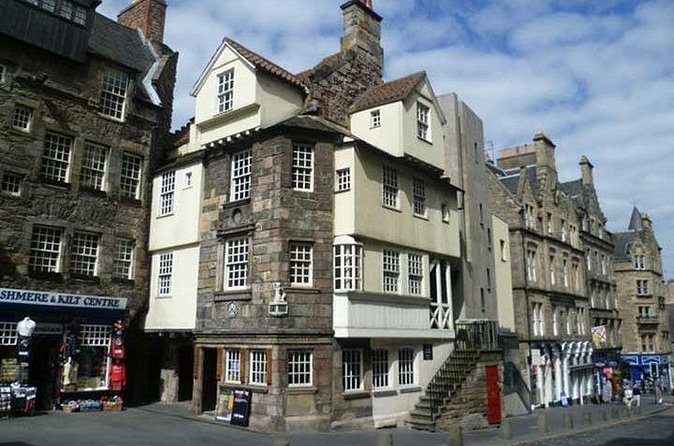
As you pass John Knox House, the narration ties John Knox to support for the Scottish Witchcraft Act. This is one of the clearer “names and law” moments in the walk, and it gives you a lens for how religious authority and legal action could overlap.
If you want history that explains mechanisms—not just events—this is the section that helps. Instead of treating witchcraft as pure superstition, it frames it as a system of accusation and punishment.
One small consideration: if you’re already at your limit emotionally from stories of persecution, this is where the topic may feel most direct. That said, the narration keeps the pace readable.
High Street toward St Giles: the shift to confession and punishment
The tour continues through parts of High Street, then moves around the exterior of St Giles’ Cathedral. This is another key moment because the audio talks about torture methods used to extract confessions from suspected witches.
That subject is heavy. The practical value here is context: it helps you understand why accusations spread and why fear could become a tool. The cathedral area also makes sense as a backdrop because it’s a central landmark where you can see how public belief and public life intersected.
When you reach this part of the route, I recommend a slower pace. Don’t rush the listening. Let the audio sit long enough for the story to make emotional and historical sense.
Victoria Terrace and the Wizard of West Bow story
As you pass over Victoria Terrace, you’ll hear the story of Major Thomas Weir, nicknamed the Wizard of West Bow. This is a tonal change from strict legal and religious framing, and it gives you something more character-driven.
Why that matters: witchcraft history isn’t only trials and statutes. It’s also the way certain figures were labeled, remembered, and turned into local legend. This section adds variety so the walk doesn’t feel like nonstop grimness.
Also, it’s in a spot that works for photos and city views. Even when you’re listening, you’ll likely pause naturally because the open sightlines are nicer than the narrow closes.
Ending at Castle Hill: the last witch of Scotland
The tour ends at the top of Castlehill, just before the Esplanade. As you walk up the street toward the finish, the narration includes the story of the last witch of Scotland.
This ending choice is smart because it gives you a payoff that matches the uphill effort. It also fits how Old Town Edinburgh “feels”: you climb toward a higher vantage while you learn how the topic of witchcraft was remembered at the end of an era.
If you’ve got energy after the tour, stay up there a moment longer. The last stage is a good place to look back at where you started and connect the landmarks in your head.
What makes the narration work so well

The reviews highlight that the narration is professional and that the storytelling stays sensible, not dry or overly textbook-focused. I think that’s the real secret ingredient here: the tour doesn’t just list facts. It frames them into a walking story you can follow with minimal effort.
The narrator name that comes up is Kat, and that matters because you can tell the audio is paced like a guided conversation. You’re not stuck reading dense explanations while trying to walk through crowds.
You can also expect the tour to be structured so each segment has a reason. There’s a lot of witchcraft content out there that turns chaotic fast. This one stays tight to place-based storytelling, which makes it easier to remember.
Walking comfort and who this suits best
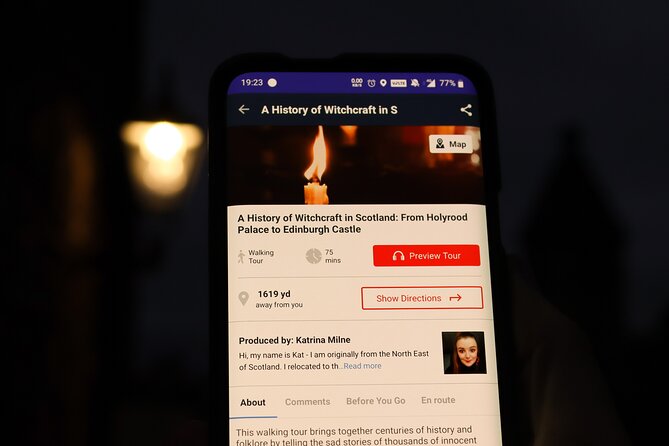
This is best for people who enjoy on-foot city wandering with context. You’ll be walking along the Royal Mile and handling stops that include narrow passages like closes and the exterior of major buildings.
It’s also a solid fit if you like:
- Self-paced history (you control breaks and listening speed)
- Curious, place-based storytelling
- A route that covers major landmarks in about 1–1.5 hours
It may be less ideal if you have limited mobility or you dislike hills, because the ending is up at Castlehill. Most travelers can participate, but the route isn’t designed to avoid terrain.
Should you book this Edinburgh witchcraft audio tour?
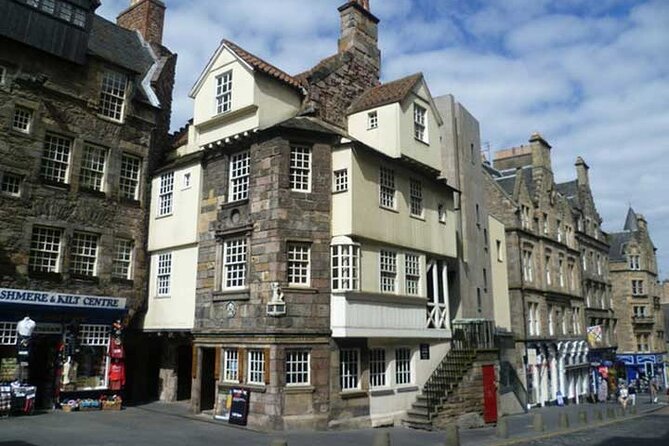
If you want a low-cost, high-effort-value way to understand witchcraft history in Edinburgh, this is an easy yes. For $9.99, you get lifetime access in English, offline audio and maps, and a walk that connects the story to real locations: Palace of Holyrood, Bake House Close, John Knox House, St Giles’ Cathedral surroundings, Victoria Terrace, and finally Castle Hill.
Book it if you like history that explains how belief and authority shaped real outcomes, and you don’t mind walking at a steady pace. Skip it if you want a hands-on museum-style experience or you don’t like listening to audio while moving around.
FAQ

FAQ
How long is the self-guided audio tour?
It’s approximately 1 hour to 1 hour 30 minutes.
Where does the tour start and end?
It starts outside the Palace of Holyrood area in Edinburgh EH8 8DU. It ends at the top of Castlehill just before the Esplanade, at Esplanade, Edinburgh EH1.
What does the tour cost?
The price is $9.99 per person.
What app do I need for the tour?
You’ll use the VoiceMap app, available for Android and iOS.
Can I download it for offline use?
Yes. Offline access includes audio, maps, and geodata.
Do I need a smartphone and headphones?
Yes. A smartphone and headphones are not included.
Is the tour guided by a person?
No, it’s self-guided. It’s private in the sense that only your group participates, but you use the audio on your own.
Are tickets or museum entries included?
No. Tickets or entrance fees to any museums or attractions are not included.
What language is the tour offered in?
It’s offered in English.
Is the experience refundable if I cancel?
No. It’s non-refundable and cannot be changed for any reason.
More Guided in Edinburgh
- Edinburgh: Harry Potter Magical Guided Walking Tour★ 4.8 · 11,944 reviews
- Edinburgh Castle: Guided Walking Tour with Entry Ticket★ 4.7 · 11,699 reviews
- Edinburgh: Edinburgh Castle Guided History Tour with Tickets★ 4.8 · 9,933 reviews
- Edinburgh Castle: Guided Walking Tour with Entry Ticket★ 5.0 · 5,540 reviews
- Edinburgh Castle Guided Walking Tour in English★ 5.0 · 5,214 reviews
More Tours in Edinburgh
- Edinburgh: Loch Ness, Glencoe & the Scottish Highlands Tour★ 4.6 · 17,446 reviews
- Edinburgh: Harry Potter Magical Guided Walking Tour★ 4.8 · 11,944 reviews
- Edinburgh: Underground Vaults Tour★ 4.6 · 11,758 reviews
- Edinburgh Castle: Guided Walking Tour with Entry Ticket★ 4.7 · 11,699 reviews
- From Edinburgh: Loch Ness, Glencoe & Scottish Highlands Tour★ 4.7 · 11,381 reviews
More Tour Reviews in Edinburgh
- Edinburgh: Loch Ness, Glencoe & the Scottish Highlands Tour★ 4.6 · 17,446 reviews
- Edinburgh: Harry Potter Magical Guided Walking Tour★ 4.8 · 11,944 reviews
- Edinburgh: Underground Vaults Tour★ 4.6 · 11,758 reviews
- Edinburgh Castle: Guided Walking Tour with Entry Ticket★ 4.7 · 11,699 reviews
- From Edinburgh: Loch Ness, Glencoe & Scottish Highlands Tour★ 4.7 · 11,381 reviews
Fresh off the cobbles: newer Edinburgh tours we have written up






Historical Tours, compared.
 ★ 4.8Edinburgh Castle Guided History Tour with TicketsFrom $499,933 reviews
 ★ 4.9Whisky Tasting with History and StorytellingFrom $242,451 reviews
 ★ 4.8Old Town History and Tales Walking TourFrom $242,361 reviews
 ★ 5.0Old Town Walking Tour History and Tales in EdinburghFrom $242,168 reviews
 ★ 4.5Old Town and Underground Historical TourFrom $271,802 reviews
 ★ 5.0Old Town Historical and Underground TourFrom $271,574 reviews
 ★ 4.5Multi-Sensory Small-Group Historic Vaults Tour in EdinburghFrom $371,384 reviews
 ★ 4.8Witches & Haunted History Walking TourFrom $241,290 reviews
Browse the lists this tour appears in